
Why a Survival Gear Checklist Matters
Emergencies rarely announce themselves. A wildfire evacuation order, a multi-day power outage, or a sudden storm can force you to act within minutes. The difference between scrambling and staying calm comes down to preparation — and preparation starts with a written survival gear checklist. Instead of guessing what you need while the clock is ticking, you work from a plan you already trust.
A good checklist does more than list items. It organizes your gear into categories so you can pack fast, avoid duplicates, and spot gaps before they matter. Below is a practical framework built around the categories that matter most: power, navigation, fire, tools, water, food, and the bags that carry it all.
Core Categories: Power & Charging
Modern survival gear runs on batteries, so keeping those batteries charged is non-negotiable. A dead phone means no maps, no calls, and no emergency alerts.
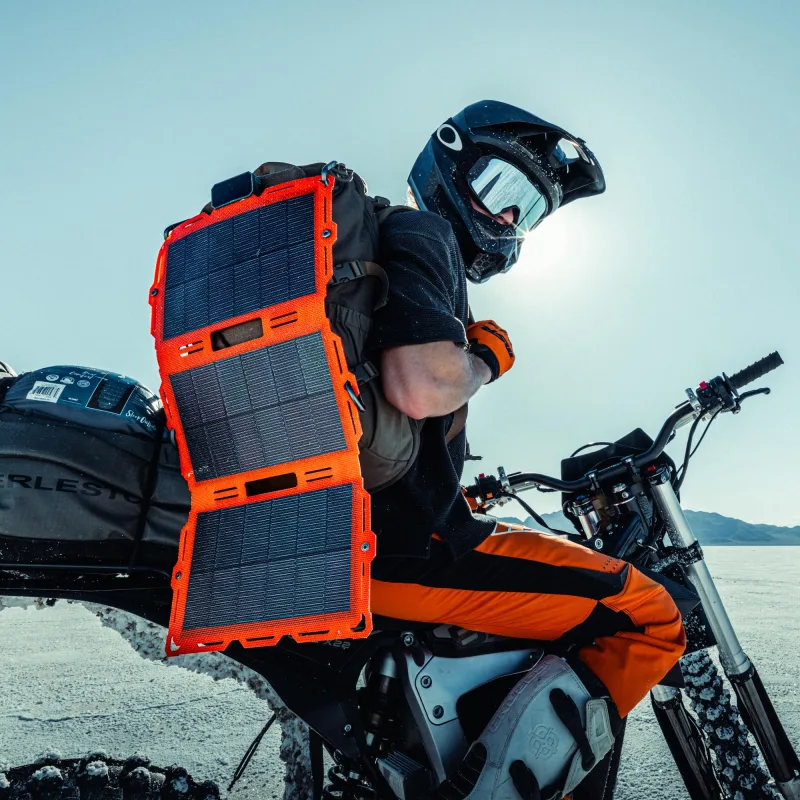
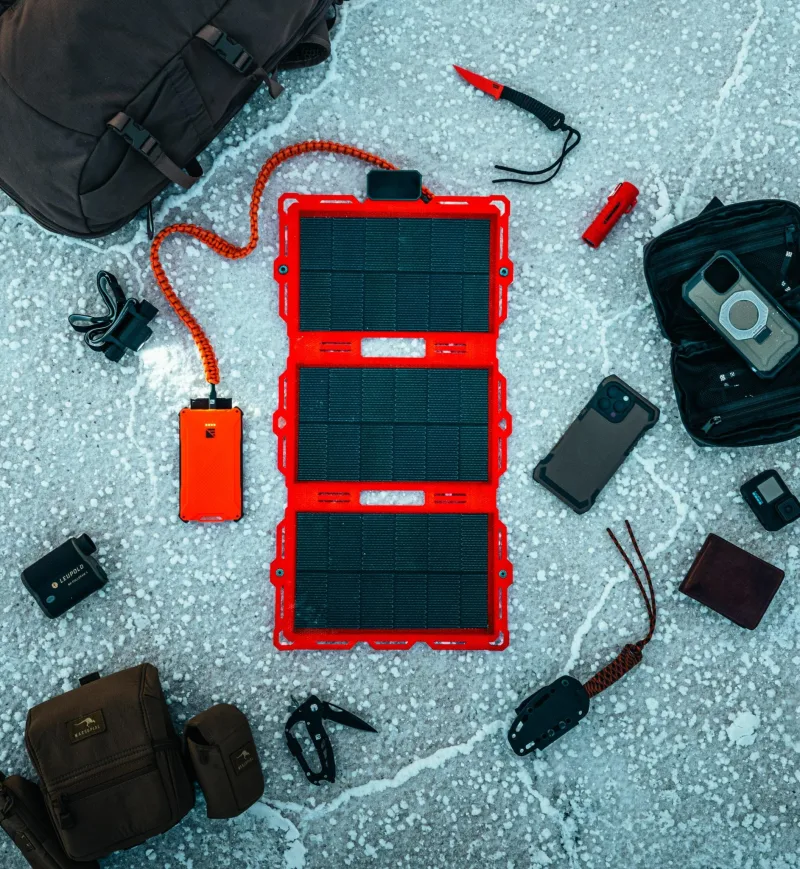
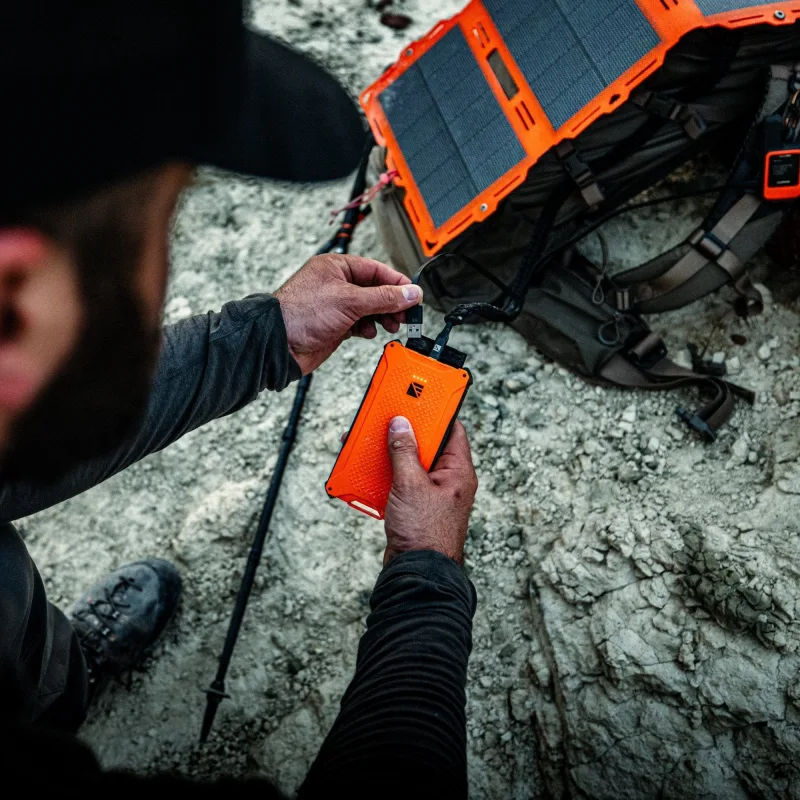
- Solar charging: A foldable panel lets you harvest power anywhere the sun reaches. The Spectre 18W Solar Panel is compact enough to strap to a pack and strong enough to top up phones, headlamps, and radios.
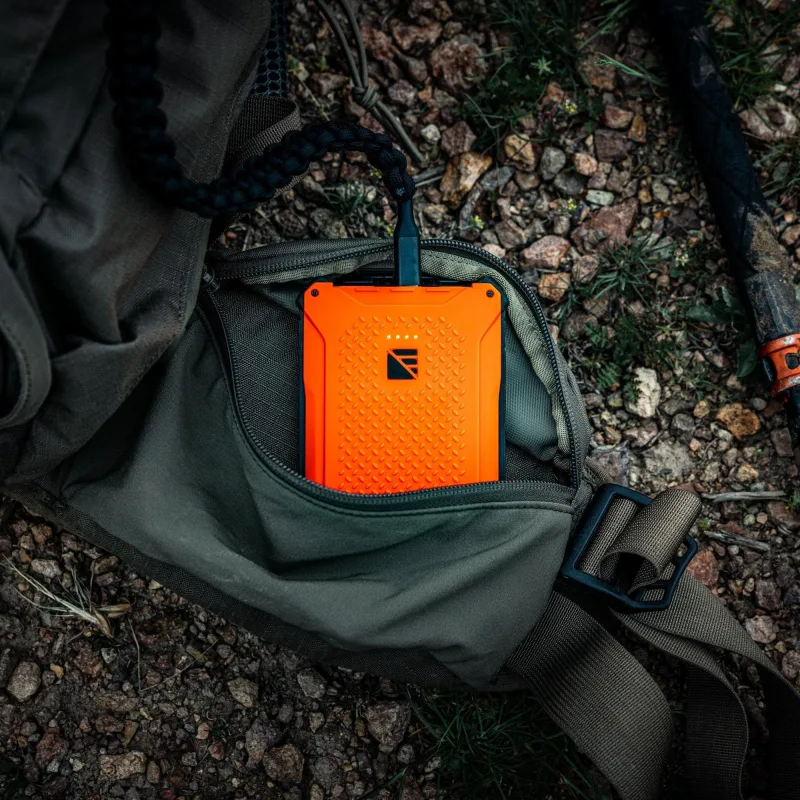
- Power banks: A rugged, high-capacity bank such as the Poseidon Pro Power Bank keeps your devices alive through long outages.
- Jump starters: If you shelter in a vehicle, the Zeus Pro Jump Starter can revive a dead battery and often double as a portable power source.
Test every charging device once a season. Batteries degrade quietly, and you want to discover that at home, not on the road.
Navigation & Communication
When cell networks fail, satellite communication and offline navigation become your lifeline. A handheld satellite messenger lets you send an SOS and check in with family even without bars. Pair it with a rugged GPS watch that tracks your position and weather changes, and a battery-powered weather radio tuned to NOAA broadcasts for storm warnings.
Keep paper backups too: a printed local map and a compass weigh almost nothing and never need charging.
Fire, Heat, and Light
Fire provides warmth, cooking, water purification, and morale. Pack at least two ignition methods — a ferro rod and waterproof matches are a solid pair — plus dry tinder in a sealed bag. A reliable tactical flashlight covers lighting, signaling, and self-defense, while spare batteries for every device belong in the same pouch so nothing gets separated.
Tools, Knives, and Recovery Gear
Tools turn raw materials into shelter and repair. A fixed-blade knife handles batoning, food prep, and cutting cordage; a multi-tool covers smaller jobs. Add work gloves for debris clearing and safety goggles for dust and flying fragments.
If you travel by vehicle, recovery gear matters as much as survival gear. A tow strap lets a good Samaritan pull you out of mud, sand, or snow without damaging either vehicle. Check straps for fraying before every trip and store them where you can reach them without unpacking the whole trunk.
Water and Food
You can survive weeks without food but only days without water. Store commercially sealed emergency water for the first 72 hours and carry a filtration or purification method for everything else — a quality filter removes sediment and pathogens from streams and rain catchment.
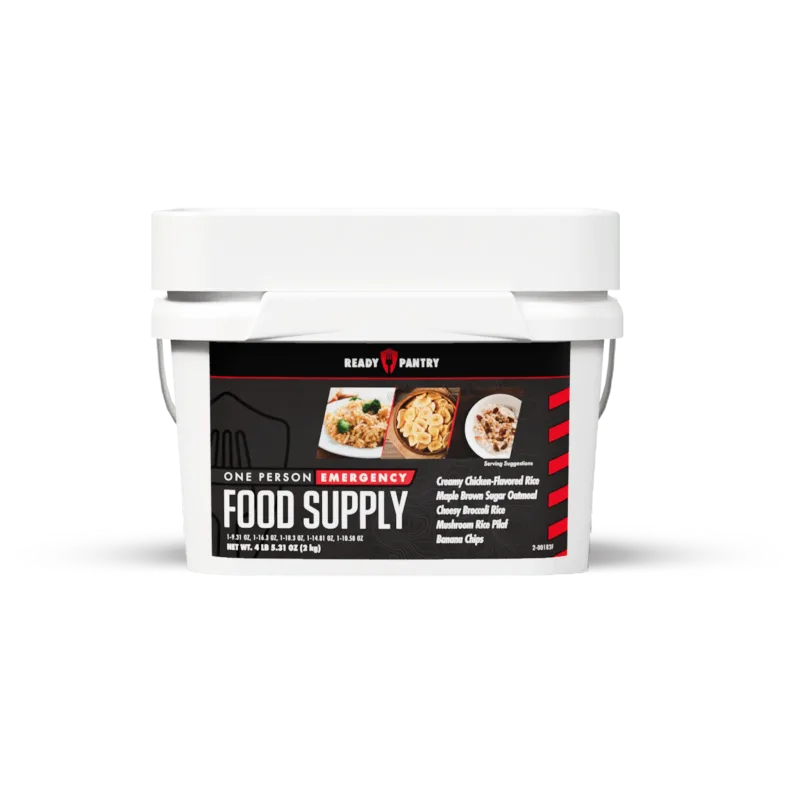
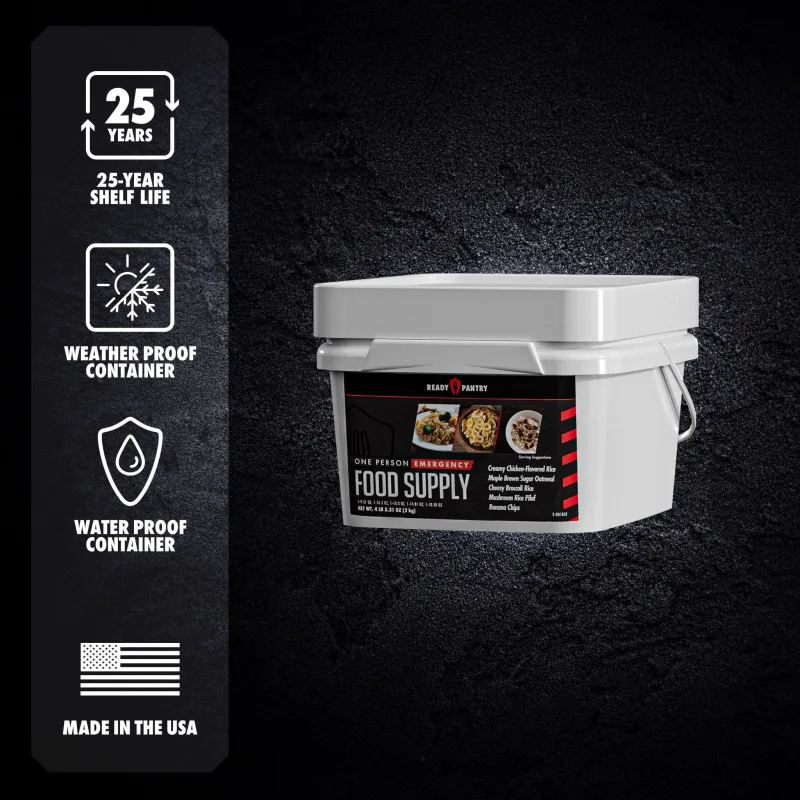
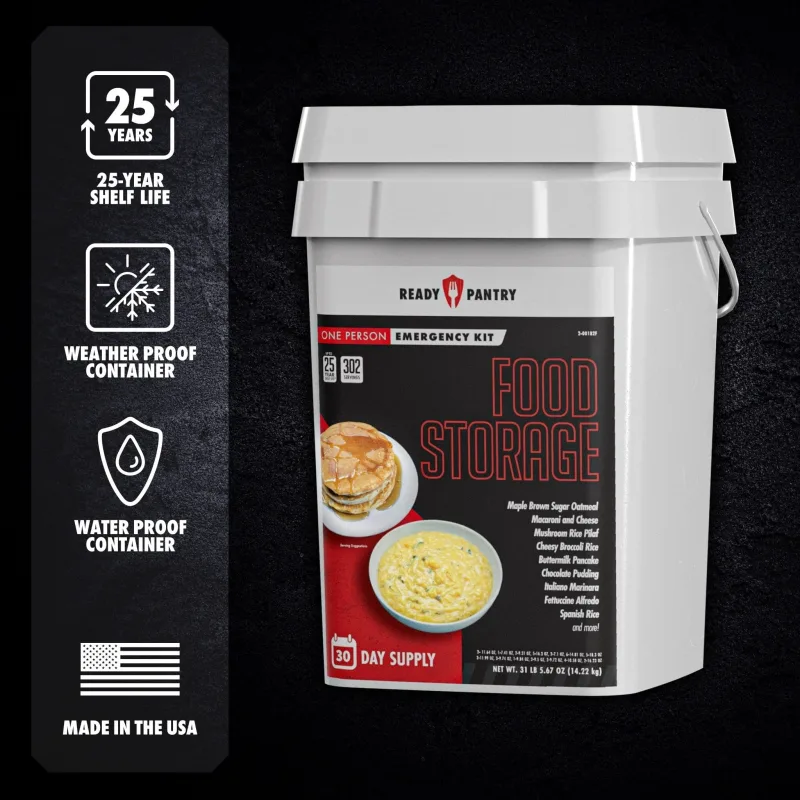
For food, build a supply that matches your household size and shelf life. A 3 Day Food Supply covers short evacuations, while a One Week Food Supply or One Month Food Supply handles extended disruptions. Rotate stock annually and keep a manual can opener with the food, not in a drawer at home.
First Aid and Hygiene
A trauma-focused kit should include pressure wraps, gauze, tape, gloves, and a tourniquet. Hygiene items are easy to overlook but prevent illness and keep morale up: body wipes, hand sanitizer, and a way to manage waste. A dedicated triage kit keeps the most critical supplies organized so you can find them one-handed.
Packing It All: Bags, Packs, and Accessories
Gear only helps if you can carry it. Choose a pack sized to your realistic loadout — a 60-liter option works for vehicle and family kits, while a compact day pack suits quick evacuations. Waterproof dry bags protect electronics, documents, and spare clothing from rain and river crossings.
Finish with small accessories that make the system work: a wide-mouth insulated bottle for clean water, a weather-resistant windbreaker for sudden temperature drops, and a hat for sun and rain protection. Label each bag by purpose — shelter-in-place, go-bag, vehicle kit — so anyone in your household can grab the right one in seconds.
Build, Test, Repeat
Write your checklist, gather the gear, then test it. Charge the panels, filter a liter of water, and practice setting up shelter in your backyard. Review the list every six months, replace expired items, and update it as your household changes. Preparedness is not a one-time purchase — it is a habit that keeps you ready for whatever comes next.